Tuesday, June 29, 2010

my garden in san carlos


I've been meaning to write about my garden for quite some time. It's my first garden that's in the ground. Or, almost in the ground, I suppose. It's in an 8x4 raised bed that I built myself in the backyard of the house we bought in April. I started on the garden space before we even moved into the house - dug out sod, hauled home dirt and bark and supplies, and put it together as the inside of the house was being painted in preparation for our move.

Here's a picture recap of the progression over the past couple of months:


The garden is in full swing. It's been a little neglected, since I've been traveling for pretty much the past month straight. Here's what's been planted and how it's going so far:


Golden Midget Watermelon: I didn't realize the seeds were supposed to be planted in a hill, so they were off to a slow start, but seem to be growing (little by little).
Lemon Cucumber: Don't seem very happy. Again, not planting the seeds into a mound of dirt might be the issue...
Roma Grape Tomato: Growing like crazy. It's covered with little green tomatoes, that should start to turn red soon.
Swiss Chard: Something (slugs?) has been eating my chard. JR's dad had a good idea for an organic solution that I'm going to try.
Pak Choy: It was up one day, and bolted the next. I didn't get a chance to try it before going out of town, but JR ensures me that he ate some of it before pulling the rest up.
Carrots: I've been thinning them daily and eating the little baby ones as I do. You'll have a hard time convincing me that there is anything better than a fresh carrot from the garden.
Strawberries: I got a couple red, luscious berries from the plant in early June, but haven't seen much action from it since then. I need to consult my gardening book (or my mother).
Rouge D'Hiver Lettuce: According to the back of the seed pack, this is a read romaine heirloom variety from France. It's growing like crazy and has been the basis of many salads as of late.

This weekend, I will spend some long overdue time with my garden. The cucs (and possibly the watermelon) will probably go. Which means I'll have some free space for a few new little plants. Stay tuned to see what else will take root in my garden this year!

Thursday, August 13, 2009

it's going to be a lemon!


My meyer lemon tree is officially beginning to produce lemons. This is the first blossom!

Saturday, July 25, 2009

my first tomatoes

The veggies in the garden have been growing like crazy lately! I moved the containers have been moved from the back of the house (which was becoming mostly shaded due to the position of the sun and the gigantic oak tree that lives behind our house) - they now reside on the side of the house where they get full sunshine all afternoon. Here's what's in the garden currently:


What you see above is Early Girl tomatoes, Sweet 100 tomatoes, eggplant (I think that's the Rosa Bianca in the picture; I also have a Japanese), and my newest dahlia. Sadly, the first cherry tomato ripened this past week while I was on vacation (that's it starting to blush above), but JR was here to consume it. There were three ripe ones this morning to greet me on my return from Seattle, which I ate straight off the plant. There is little that's better than a fresh tomato warmed by the sunshine. Soon, we will be overrun with them - I can hardly wait!

Sunday, April 26, 2009

the garden is growing!

My container garden is officially made up of more than one container.


First, a bit of catch up (it's been awhile since I've posted about my garden) - I planted the seedlings from the salad class last weekend - this means the wine barrel's yields will soon include butter lettuce, spinach, Jodie's lettuce (Jodie was the class instructor - the impending lettuce in my garden is from seeds from her lettuce crop last year, we're not sure what kind), nasturtium (creamsicle flowers with edible petals!), and cilantro.

Today, three new containers became part of my garden. In them, I planted early girl tomatoes, cherry tomatoes, and basil. I also ripped out my oregano plant from last year (it was getting really woody) and planted some new starts from one of the sprigs. 

On impulse, I grabbed a pack of strawberry seeds when I was at the nursery. I had been wanting strawberry plants, but didn't find any. According to the package, I should have planted them earlier and keep them inside until they sprout, but I decided instead to sow the seeds directly into the wine barrel. We'll see what happens!

Saturday, April 18, 2009

i heart california

It's sunny. It's warm. The flowers are blooming. And I'm planting my next round of seedlings in the garden tomorrow! Ah, beautiful weekend.

Sunday, April 5, 2009

arugula harvest


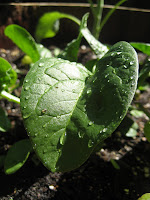
It's been 2 weeks since I've written about the container garden (which equates to 2 weeks since I've spent much time with it) and WOW has it grown! The spinach went from puny to petite. The kale is growing tall. And as a result of all of the sunshine and heat lately, the arugula has bolted (and flowered, as shown above). Which means it's time to pull it up. Perfect timing, as that will allow me to spread out some of the smaller lettuces so they can grow to be big lettuces.


Today, I pulled up 3 bunches of arugula, one beautiful bunch of green lettuce (the first!) and 2 big leaves of kale. At dinnertime, I turned them into one very tasty salad (with bosc pear, chopped dried figs, and basalmic vinaigrette). I rolled up the kale leaves, sliced them thinly, and sprinkled them over our cauliflower curry.

Stay tuned for an update on the seeds planted a couple of weeks ago that are beginning to sprout! 

Sunday, March 22, 2009

how to grow a salad garden

Steph and I went to a great class yesterday at Common Grounds. It was called "How to Grow a Salad Garden." Perfect timing, given that I'm about 4 weeks into my first container garden of leafy greens. The class was taught in a small kitchen in the back of the store by Jodie Main. Jodie is a local food and garden writer who specializes in edible landscape design. Every one of the twenty-five or so chairs was occupied. I worried at first that two hours on a folding chair in a packed room was going to get uncomfortable, but the time flew by and I learned a lot.

The class began with Jodie talking through the various greens she had brought with her from her own garden: green leaf lettuce, ruby red chard, miners lettuce, nasturtium, cutting celery, spearmint, onion chives, garlic chives, french thyme, lavender; this is just a sampling -  the list went on and on. As she talked about each item, she handed it off to a volunteer from the class, who tore everything into pieces onto a giant platter. Over the course of the first hour or so, the growing platter of greens was turning into the most diverse salad that I had ever seen. 

After the first couple items, Jodie paused to make the dressing. She smashed a few cloves of garlic, sprinkled it with a generous amount of kosher salt and chopped it. Then she mashed it into a paste with the back of a fork, added the paste to a small bowl, and whisked it with extra virgin olive oil and basalmic vinegar. Then she turned back to the greens and edible blossoms and continued to talk us through the items. As she did, the room filled with the most delicious aroma. This was going to be one fantastic salad!

In the second half of the class (as we munched on the salad, which was fantastic indeed), Jodie talked about various ways to plant seeds and starts. I learned that I should be fertilizing my container every other week with fish emulsion (I bought some after the class and applied it to the garden this morning) to feed my greens. Leafy greens are cold weather crops, meaning that they like sun in the winter and shade once it starts to get warm out. You can plant salad crops twice per year - once in late October and again around this time of year - to have fresh salads all winter and spring. In June, it will get too warm for the greens and they will bolt - stalks will shoot upwards and eventually flower (though before that happens, I plan to replace the greens in the container with some tomatoes and other warmer weather fruits and veggies).

We learned a couple of different ways both to plant and harvest the greens. The most common planting method is to make a hole in the dirt that's about 3x as deep as the seeds you plan to plant, put a couple of seeds in each hole, cover with dirt, and pack the dirt down. When you plant this way, once the crop grows you can harvest by pulling up the whole bunch (roots and all), cutting at the base, or you can cut outer leaves and allow the center to continue to grow. Another method of planting is broadcasting - you sprinkle seeds over an area fairly densely, then rake the area and top with more dirt. This lends itself well to the "cut and come again" method: the greens will grow very densely and once they get 4-5 inches high, you can grab a handful and cut about 1" above the dirt. The greens will continue to grow so you can harvest again once they again reach 4-5 inches tall. This works best with greens that grow upright.

I learned a couple of good ideas for battling the squirrels that have been digging in the container: apparently they really hate spearmint. Which is handy, because we actually have some growing behind our house (pictured). Jodie recommended putting a handful of leaves in the blender with water and spraying this on the garden. Or she thought you might even be able to put leaves or branches of leaves in the container. I chose this method - this morning, I tore up mint leaves and sprinkled them over the container. Hopefully this will deter the "fuzzy tailed rodents" (as JR likes to call them). I will report back on whether this successfully ends my battle with the neighborhood squirrels.

Probably the most interesting thing I learned during the two hour class had to do with making cuts from a plant to create new starts. This can be done with any woody herb (sage, thyme, basil). The demonstration used a sprig of italian oregano. Here's how it went:


The growing nodes, when they are planted in dirt and cease to get any light, somehow know that they should grow as roots instead of leaves. Isn't that amazing?

At the end of the class, we planted seeds to take home with us. These will stay in the house in a sunny window until they are big enough to plant outside. It is perfect timing: by the time my seeds turn into starts big enough to plant, there should be space in the container (created by the greens we will eat in the meantime). My sampling includes: creamsicle nasturtium, butter lettuce, cilantro, spinach, and Jodie's lettuce (she didn't remember exactly what kind it was, but we learned how to take the seeds from the flowers that had bolted from her crop last year).

Here's how the garden looks this week:

Stay tuned for more updates!